I first learned の as the Japanese equivalent of an apostrophe-s. 私の本 meant “my book,” and that seemed simple enough. Then I started running into phrases like 日本語の先生, 赤いの, and どうしたの? None of them fit neatly into “belongs to.”
The explanation that finally helped me was broader: の connects one thing to another. Sometimes that connection is ownership. Sometimes it's a type, place, or description. And sometimes の is doing a completely different job at the end of a sentence.
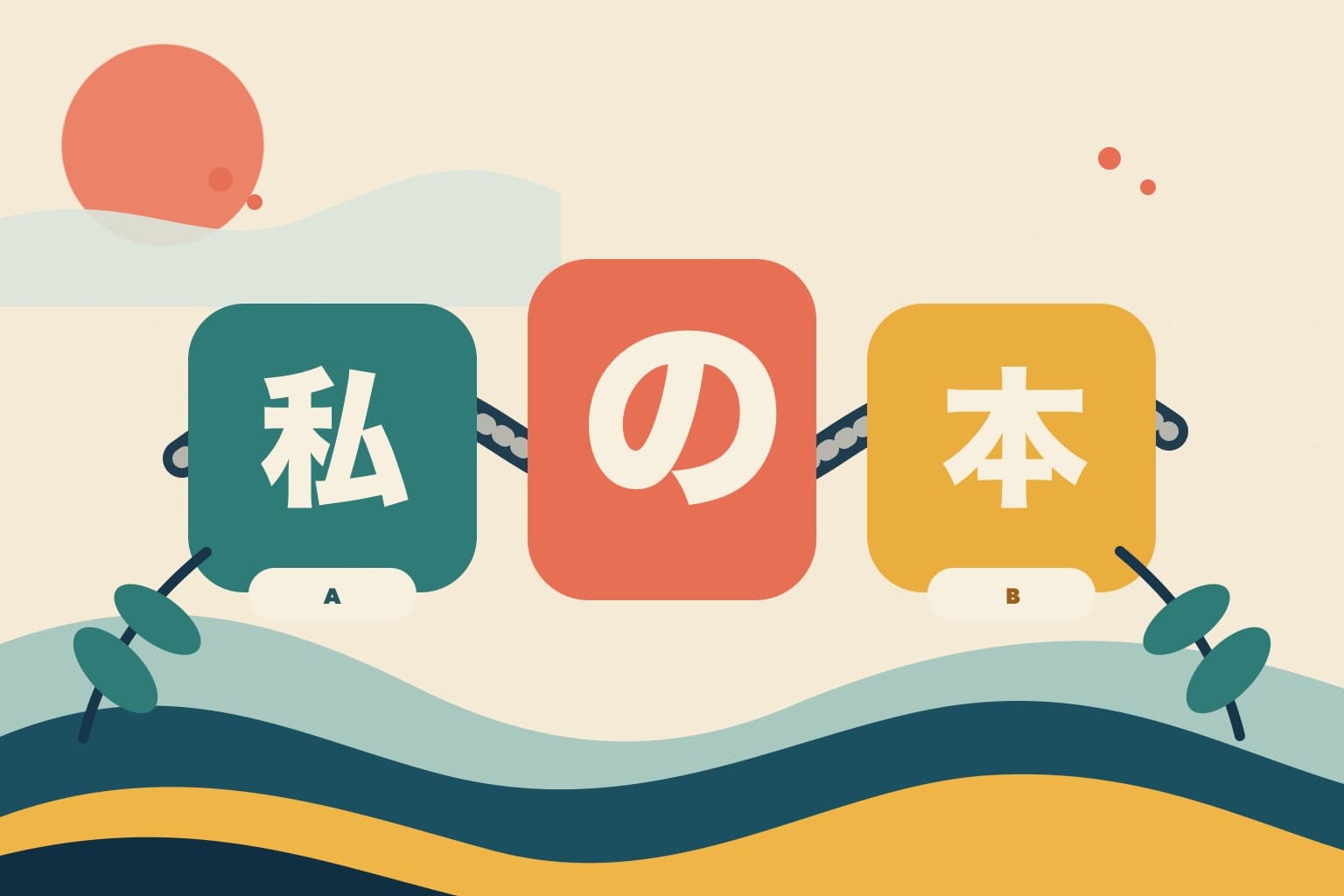
The basic pattern: A の B
Start with this shape:
A の B → “B connected with A”
The important noun comes last. B tells you what the thing is; A narrows it down.
- 私(わたし)の本 → “my book”
- 友達(ともだち)の車(くるま) → “my friend’s car”
- 日本(にほん)の映画(えいが) → “a Japanese film” / “a film from Japan”
When a phrase gets long, I look at the final noun first. In 日本の映画, we're talking about a film. 日本 tells us what kind of film.
Using の for possession
This is the familiar one: the noun before の owns or belongs with the noun after it.
- 先生(せんせい)のペン → “the teacher’s pen”
- 妹(いもうと)の犬(いぬ) → “my younger sister’s dog”
- 私の名前(なまえ) → “my name”
English jumps between “my,” “the teacher’s,” and “of the company.” Japanese keeps the same A の B pattern.
Personal pronouns work the same way:
- 私の → “my”
- あなたの → “your”
- 彼(かれ)の → “his”
- 彼女(かのじょ)の → “her”
You won't always hear them, though. Japanese drops information people can recover from context. At home, スマホどこ? will usually be understood as “Where's my phone?” without 私の.
Using の to describe a noun
This is where “apostrophe-s” starts to fall apart. の can show type, material, location, origin, purpose, or subject too.
- 日本語(にほんご)の先生 → “a Japanese-language teacher”
- 木(き)の机(つくえ) → “a wooden desk”
- 東京(とうきょう)の店(みせ) → “a shop in Tokyo”
- 夏(なつ)の旅行(りょこう) → “a summer trip”
- 日本の歴史(れきし) → “Japanese history” / “the history of Japan”
Trying to force “of” into every translation creates phrases nobody would say in English. 木の机 isn't “the desk of wood.” It's simply “a wooden desk.” The relationship changes with context; the Japanese pattern doesn't.
Word order matters here:
- 夜(よる)の海(うみ) → “the sea at night”
- 海の夜 → “a night at sea”
The first phrase is about a sea. The second is about a night. I still use this pair as a quick reminder to check the final noun.
When several の particles pile up
Japanese can keep stacking noun relationships:
- 私の友達の猫(ねこ) → “my friend’s cat”
- 会社(かいしゃ)の近くの駅(えき) → “the station near the company”
- 日本語の先生のおすすめの本 → “the Japanese teacher’s recommended book”
That last one looked awful to me the first time I saw it. Reading backward makes it manageable:
- 本 — a book
- おすすめの本 — a recommended book
- 先生のおすすめの本 — the teacher’s recommended book
- 日本語の先生のおすすめの本 — the Japanese teacher’s recommended book
This doesn't mean every chain is elegant. If you're writing and have to trace five の particles with your finger, your reader may have to do the same. Splitting the phrase is often kinder.
When の replaces the missing noun
If everyone already knows what you're talking about, の can stand in for the noun. English often uses “one” or a possessive like “mine.”
- 赤(あか)いのをください。 → “Please give me the red one.”
- 大(おお)きいのが欲(ほ)しい。 → “I want the big one.”
- これは誰(だれ)の? → “Whose is this?”
- 私のです。 → “It’s mine.”
Imagine you're choosing a shirt. Once シャツ is obvious, repeating 赤いシャツ every time sounds unnecessary. 赤いの does the job.
One caution: this use is natural for things, but it can sound dismissive when used to label a person. “The red one” is fine for a shirt. A person deserves more than の.
The explanatory の at the end
Then there's sentence-final の. This isn't possession at all. It asks for background or gives the sentence an explanatory feel — something like “what happened?” or “the thing is…”
- どうしたの? → “What happened?”
- 行(い)かないの? → “You’re not going?”
- 明日(あした)は仕事(しごと)なの。 → “The thing is, I have work tomorrow.”
The fuller pattern is のだ / のです. In conversation, it often contracts to んだ / んです:
- どうして遅(おく)れたんですか? → “Why were you late?”
- 電車(でんしゃ)が止(と)まったんです。 → “The train stopped, you see.”
I find it useful to think of this as the speaker adding “here's the situation” to the sentence. Translating の word for word usually makes the English worse, so focus on the tone instead.
What の looks like in casual Japanese
In messages and social posts, obvious nouns and pronouns disappear constantly, while explanatory んだ shows up everywhere:
- これ誰の? → “Whose is this?”
- そうなんだ → “Oh, I see.” / “So that’s how it is.”
- 何(なに)してるの? → “What are you doing?”
You may have heard that sentence-final の is “feminine.” A soft statement ending in の can carry that association, but questions like どうしたの? are used widely, and のだ / んだ isn't limited by gender. The actual sentence and tone tell you much more than that shortcut does.
Mistakes I kept making
- Reading the phrase in the wrong direction. 私の本 is “my book.” 本の私 makes 私 the main noun and usually doesn't say anything useful.
- Translating every の as “of.” 日本の映画 is often “a Japanese film,” not “a film of Japan.”
- Putting の after an い-adjective. Say 赤い車, not 赤いの車. 赤いの works only when の replaces the noun.
- Mixing up the two big jobs. 先生の本 connects nouns. 行くの? asks for confirmation or context.
- Writing endless chains. A phrase can be grammatical and still make people reread it.
If particles in general still feel slippery, the topic and subject markers in our は vs が guide are worth comparing with の.
Is の on the JLPT?
Yes. Noun-linking の and the “one” replacement use are core JLPT N5 grammar. Explanatory のです / んです also appears early and stays common at every level. Our JLPT N5 grammar checklist shows how it fits with the other beginner patterns.
The takeaway
When you see A の B, find B first and ask how A describes it. That one habit handles possession, categories, locations, and most of those intimidating の chains. Sentence-final の belongs to the explanatory family, so listen for context rather than ownership.
And if you find a sentence with three の particles and still can't see what connects to what, paste it into Shiritai. Seeing each relationship separated in the full sentence is much more useful than staring at a dictionary entry for の.